Cerebral Aneurysm Stent When to Give Asprin Again
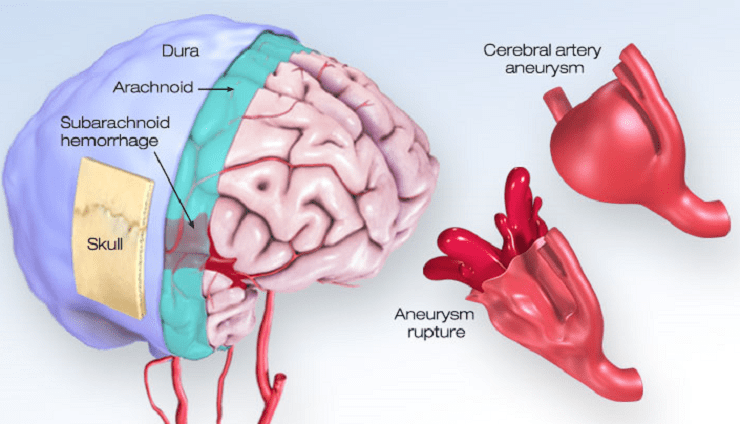
What is a cerebral aneurysm?
An aneurysm is a weak surface area in a claret vessel that usually enlarges. It'southward often described every bit a "ballooning" of the blood vessel.
How do aneurysms grade? Are people built-in with an aneurysm?
People usually aren't born with aneurysms. Most develop after age 40. Aneurysms unremarkably develop at branching points of arteries and are caused by constant pressure level from blood flow. They often enlarge slowly and become weaker as they grow, just as a balloon becomes weaker as information technology stretches. Aneurysms may be associated with other types of blood vessel disorders, such as fibromuscular dysplasia, cognitive arteritis or arterial dissection, merely these are very unusual. Some aneurysms are due to infections, drugs such as amphetamines and cocaine or direct brain trauma from an accident.
How is an aneurysm diagnosed?
Special imaging tests can find a brain aneurysm. In the CTA (computed tomographic angiography), patients are placed on a table that slides into a CT scanner. A special contrast material (dye) is injected into a vein, and images are taken of the blood vessels to look for abnormalities such as an aneurysm. In the second exam, called MRA (magnetic resonance angiography), patients are placed on a tabular array that slides into a magnetic resonance scanner, and the blood vessels are imaged to detect a cerebral aneurysm.
The nearly reliable examination is called a diagnostic cognitive angiogram. In this test, the patient lies on an X-ray tabular array. A minor tube (catheter) is inserted through a blood vessel in the leg (groin) and guided into each of the blood vessels in the neck that get to the encephalon. Contrast is and so injected, and pictures are taken of all the blood vessels in the brain. This examination is slightly more invasive and less comfortable.
Before any treatment is considered, a diagnostic cerebral angiogram is usually performed to fully map a plan for therapy.
If one aneurysm forms, volition others grade? Having one aneurysm means in that location's about a 20 % adventure of having one or more other aneurysms.
What are the symptoms of an unruptured aneurysm? Smaller aneurysms usually don't accept symptoms. But as an aneurysm enlarges, it can produce headaches or localized pain. If an aneurysm gets very big, it may produce pressure on the normal brain tissue or next fretfulness. This pressure can cause difficulty with vision, numbness or weakness of an arm or leg, difficulty with memory or speech, or seizures.
What causes an aneurysm to bleed?
Nosotros normally don't know why an aneurysm bleeds or exactly when information technology volition bleed. We do know what increases the chance for bleeding:
High claret pressure level is the leading cause of subarachnoid hemorrhage. Heavy lifting or straining can cause force per unit area to rise in the brain and may atomic number 82 to an aneurysm rupture.
Strong emotions, such as being upset or angry, can heighten blood pressure and tin can subsequently crusade aneurysms to rupture.
*Blood thinners (such as warfarin), some medications and prescription drugs (including diet pills that act as stimulants such as ephedrine and amphetamines), and harmful drugs like cocaine can cause aneurysms to rupture and bleed.
What are the chances that an unruptured aneurysm may bleed? Many factors decide whether an aneurysm is probable to bleed. These include the size, shape and location of the aneurysm and symptoms that it causes. Smaller aneurysms that are uniform in size may be less likely to bleed than larger, irregularly shaped ones. Once an aneurysm has bled, there's a very loftier take a chance of re-bleeding.
What happens if an aneurysm bleeds? If an aneurysm ruptures, it leaks blood into the space around the brain. This is called a subarachnoid hemorrhage. Depending on the corporeality of blood, it can produce:
- a sudden astringent headache that tin last from several hours to days
- nausea and vomiting drowsiness and/or blackout
The hemorrhage may likewise harm the encephalon direct, usually from bleeding into the encephalon itself. This is called a hemorrhagic stroke. This tin can lead to:
- weakness or paralysis of an arm or leg
- trouble speaking or understanding linguistic communication
- vision problems
- seizures
What is the usual impairment to the encephalon afterward an aneurysm bleeds?
In one case an aneurysm bleeds, the chance of death is well-nigh forty% and the chance of some brain damage is about 66 %, even if the aneurysm is treated. If the aneurysm isn't treated speedily plenty, some other bleed may occur from the already ruptured aneurysm.
Vasospasm (irritation by the leaked blood causing narrowing of the blood vessels) is a common complication following a ruptured aneurysm. This tin lead to farther brain damage. Other problems may include hydrocephalus (enlargement of the spaces within the encephalon that produce cerebrospinal fluid), difficulty animate that requires a mechanical ventilator, and infection.
Why is the damage so extensive afterward bleeding? Afterwards blood enters the encephalon and the space around information technology, directly damage to the brain tissue and brain function results. The corporeality of damage is normally related to the amount of blood. Harm is due to the increased pressure level and swelling from bleeding straight into the brain tissue, or from local cellular damage to brain tissue from irritation of blood in the infinite betwixt the encephalon and the skull.
Claret tin as well irritate and damage the normal blood vessels and cause vasospasm (constriction). This can interrupt normal blood menstruum to the salubrious brain tissue and can cause even more brain damage. This is chosen an ischemic stroke.
Will treating a ruptured aneurysm reverse or improve brain damage? One time an aneurysm bleeds and brain harm occurs, treating the aneurysm will non reverse the impairment. Treatment helps prevent more than bleeding.
How is a treatment method for an aneurysm chosen? Doctors must evaluate the risk factors that favor treatment vs. not-treatment and decide which technique may exist all-time. It'due south important to consult with experts in this field. This should include a cerebrovascular neurosurgeon who specializes in surgically clipping aneurysms, a neurosurgeon with endovascular expertise and grooming, a neurointerventionalist (a neurologist with endovascular grooming) or a neuroradiologist who specializes in the less- invasive treatment of cerebral aneurysms by coiling.
How should an aneurysm be treated?
The best handling depends on many things, including whether the aneurysm has ruptured or not. A ruptured aneurysm usually requires treatment right away. However, the handling time and options depend on the size, location and shape of the aneurysm, every bit well equally the patient's overall medical condition. If an aneurysm hasn't ruptured, the treatment decision depends on its size, location and shape, and the patient's symptoms
What treatments are available?
- Medical therapy. Small, unruptured aneurysms that aren't creating any symptoms may not demand treatment unless they grow, trigger symptoms or rupture. It's very important to accept almanac cheque-ups to monitor claret pressure level, cholesterol and other medical atmospheric condition.
- Neurosurgery. Depending on a person's adventure factors, open surgery may be recommended. Patients are placed nether general anesthesia, and the neurosurgeon places a surgical clip effectually the base of the aneurysm.
- Neurointerventionalist/neuroradiologist. Depending on the aneurysm's size, location and shape, it may be treatable from inside the blood vessel. This minimally invasive procedure is similar to the cerebral angiogram. However, in addition to taking pictures, a catheter is directed through the claret vessels into the aneurysm itself. Then, using Ten-ray guidance, the endovascular surgeon carefully places soft platinum micro-coils into the aneurysm and detaches them. The coils stay within the aneurysm and act as a mechanical barrier to claret catamenia, thus sealing it off
What are the potential complications of aneurysm treatment?
Until the aneurysm is safely and completely treated, there's always the run a risk information technology may re-drain and cause more than brain damage. If normal blood vessels are damaged, it could also upshot in more brain harm.
What follow-up is required later on aneurysm treatment? Depending on the type of treatment, the two follow-up procedures are:
- Surgical clipping. After this type of surgery, a post-operative angiogram is normally performed during the hospital stay to make sure the surgical prune has completely treated the aneurysm.
- Neurointerventionalist/neuroradiologist. After coiling an aneurysm, a routine follow-upwards angiogram is usually performed six to 12 months after the process to make sure the aneurysm remains blocked off
* Some medications are commonly called claret thinners because they can help reduce a claret jell from forming. In that location are 3 main types of blood thinners that patients commonly take: anticoagulants similar warfarin or heparin, antiplatelet drugs like aspirin, and fibrinolytics like tPA (tissue plasminogen activator). Each type of medication has a specific function to preclude a claret clot from forming or causing a blocked blood vessel, heart attack, or stroke.
fullwoodgoope1978.blogspot.com
Source: https://www.stroke.org/en/about-stroke/types-of-stroke/hemorrhagic-strokes-bleeds/what-you-should-know-about-cerebral-aneurysms
0 Response to "Cerebral Aneurysm Stent When to Give Asprin Again"
Post a Comment